Healthcare interaction design
Symbolic ICU/CCU Bed Position Controller
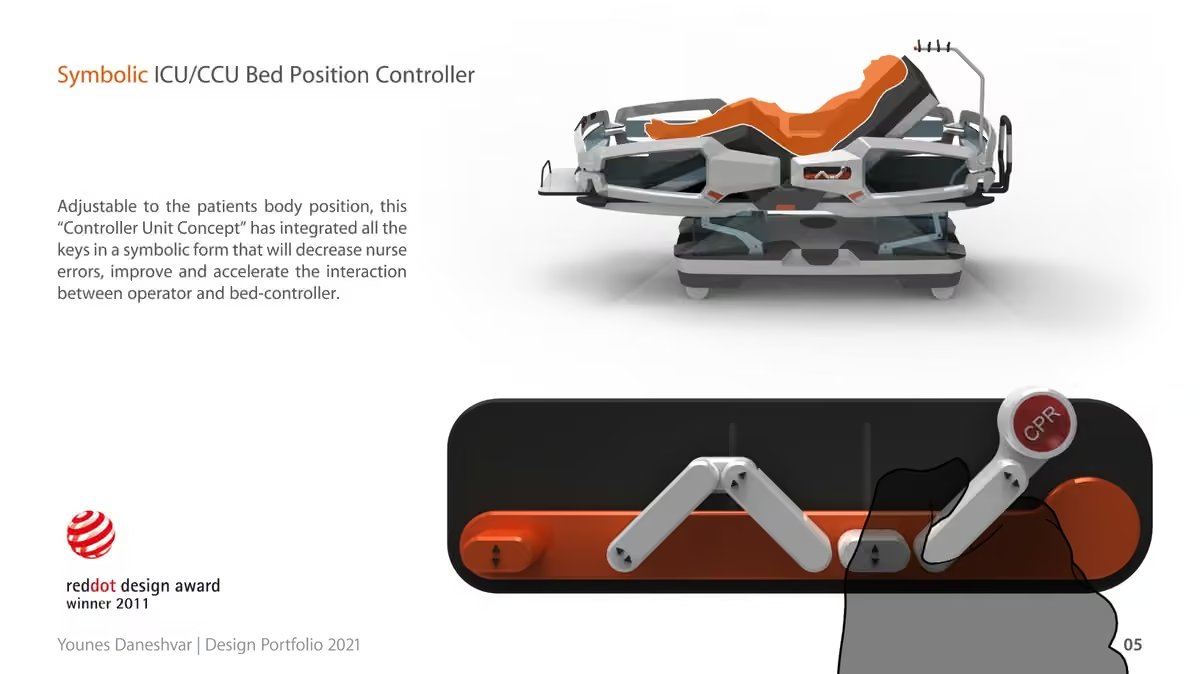
An award-winning hospital-bed controller that maps controls to the physical posture of the patient and bed, making critical adjustments more legible and direct.
Portfolio archive
Visual case study
Overview
From problem framing to a resolved design.
Conventional hospital-bed controls can present nurses with clusters of visually similar buttons for multiple functions. In stressful or time-critical situations, that interaction can increase cognitive load and slow down bed adjustment.
The concept replaces the conventional button array with symbolic levers that visually correspond to the bed sections they control. The controller was designed to make operation easier to learn, reduce interaction errors, and accelerate repositioning during routine and emergency care.
The challenge
The project focused on three recurring issues: too many controls with overlapping visual language, complexity that can reduce nurse performance, and time lost while making urgent position changes.
The design response
A body-position metaphor became the interaction model. Moving the articulated controller elements mirrors the intended movement of the bed, while a prominent CPR control supports rapid emergency access.
Standard and clinical positions
The interface was developed around common bed configurations, including backrest and leg adjustments, height control, Trendelenburg, reverse Trendelenburg, and CPR-related positioning.
References & credits
Project record
Continue
View all projects →